


Evenement
5 misconceptions about love among the vikings
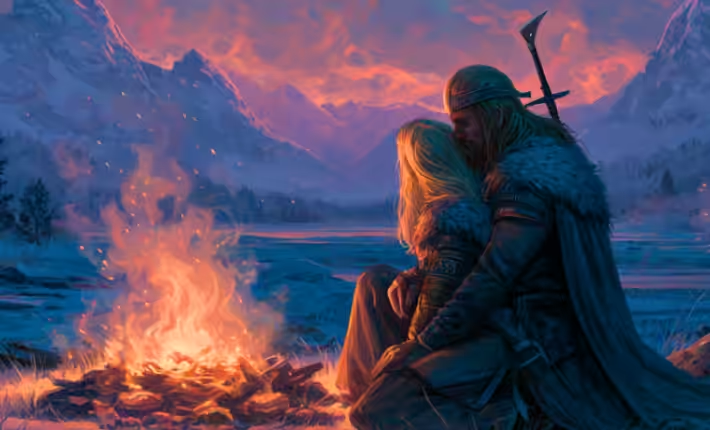
Heartless barbarians? Forced marriages? Zero romance?
Love among the vikings is often summarised as a strategic alliance between clans, far removed from the passionate feelings we associate with couples today.
And yet.
Medieval sources, Icelandic sagas and Scandinavian laws tell a much more nuanced story. Arranged marriages, certainly. But also love poetry, the right to divorce, symbolic rituals and deep attachments.
Here is what history really reveals!
Did vikings marry solely for practical reasons?
Yes… but not only that.
Viking marriage was above all a contract between families. It served to consolidate political alliances, secure support at the thing (local assembly) and organise the transfer of land.
Negotiations focused on:
- the dowry,
- the bride price (compensation paid to the bride’s family),
- property and inheritance.
The young woman could represent a major strategic asset.
But the Norse sagas also show couples bound together by affection and loyalty. Some stories even tell of lovers willing to defy their clan or die together rather than be separated.
Love was not incompatible with marriage. It was part of a specific social framework.
Did women really have nothing to say?
Contrary to popular belief, female consent did exist even if it was supervised by the family.
Some sources indicate that the future bride’s opinion could be sought in order to avoid conflicts between clans. Above all, a woman could ask for a divorce.
This right was not merely symbolic. In the event of separation, she could recover her dowry and obtain financial compensation. Her ties to her clan of origin remained strong: harming a wife was tantamount to provoking her entire family.
In a medieval Europe that was often very restrictive, this degree of autonomy is remarkable.
Did romanticism exist among the vikings?
Absolutely.
Scald poets composed mansöngr, true love poems. They combined war metaphors, images of wild nature and mythological references to celebrate the beauty or loyalty of a loved one.
Romantic gestures existed: gifts, visits, declarations, songs.
But they were closely monitored. An unapproved relationship could create political tensions or inheritance issues.
Love was permitted. Uncontrolled love, much less so.
Were the ceremonies barbaric?
Viking weddings were codified rituals.
An auspicious day was chosen often Friday, associated with the goddess Frigg. The ceremony included a banquet, vows, and the sharing of a wedding drink.
In some accounts, a sword or axe was placed in the bridal chamber to symbolise protection and fertility. The bride sometimes brought domestic objects (keys, trousseau, bread) to embody her mastery of the household.
These gestures show a sacred view of the couple and the home, far removed from the simple warrior imagination.
Was there diversity in love?
Social norms favoured heterosexual marriage, which was essential for the transmission of property and alliances.
However, some sources suggest that homoerotic practices existed and could be tolerated, provided that social obligations marriage and offspring were respected.
In this society, it was not only intimate orientation that mattered, but also the ability to fulfil one’s role within the clan.

Why was love so restricted?
Viking society was based on a balance between families and alliances. A poorly negotiated marriage could trigger conflicts, disrupt inheritances or weaken a political position.
Regulating unions helped to protect the clan’s lands, property and stability.
Love had its place, but never at the expense of social order.
In medieval Iceland, the laws of Grágás explicitly mention the conditions for divorce and the compensation due. A woman could break off her marriage if her husband failed to fulfil his obligations, a rare right in Europe at the time.